

SUMMARY: Why you should include Italian wines on your list:
- Full list coverage: Italy spans entry level, mid-tier and fine wine, enabling a complete and balanced list from a single country
- Established market scale: With over 1.1 million hectolitres sold in the UK off-trade, Italy remains a consistently high-volume, reliable category (WSTA Market Report December 2025)
- Clear premiumisation pathway: Entry-level familiarity (Prosecco, Pinot Grigio) supports structured trade-up into higher-value DOCG and single-vineyard wines
- Operational efficiency: Strong regional recognition (Barolo, Chianti) reduces staff training requirements and supports confident selling
- Versatility across formats: Performs across cuisines and service styles, particularly by the glass, supporting both margin and flexibility
There are few countries that hold the same position in the wine trade as Italy. For decades it has been a constant presence on wine lists across the UK, yet its relevance has never relied solely on history or nostalgia. Instead, Italy continues to prove itself commercially practical, stylistically diverse and culturally resonant with guests.
In a market shaped by premiumisation, tighter margins and increasingly informed consumers, the ability for one country to deliver across every level of a list has become invaluable. Italy does exactly that.
“The strength of Italy in this market is mostly due to their offers. Italy can offer to the restaurateur a full wine list covering entry levels, mid prices and fine wines. The beauty of this is that the diversity of the products will be able to make easy choices, and at the same time to offer individuality.” - Sergio De Luca, Business Development Director with more than 40 years at Enotria and awarded the Order of the Star of Italy in recognition of his contribution to British-Italian relations in the field of gastronomy and hospitality
That balance between familiarity and discovery is central to Italy’s role in the trade. For operators building or refining a list, Italian wine offers structural clarity. At the accessible end, well-known categories continue to drive reliable sales. Prosecco remains a staple by the glass across bars and restaurants, while Pinot Grigio delle Venezie continues to deliver dependable volume. These wines are instantly recognisable to guests and easy for staff to recommend, providing an essential commercial backbone. WSTA data also reinforces Italy’s dominance in the on-trade, where it remains the most popular country of origin, with Pinot Grigio and Prosecco continuing to rank among the top-selling categories and delivering 2% value growth year on year - a clear reflection of both enduring consumer recognition and consistent commercial performance
Yet Italy’s true strength lies in how naturally those entry points lead into premium exploration. As customers become more curious and confident in their choices, the category provides a clear path upwards. Single vineyard bottlings, DOCG classifications and traditional method sparkling wines allow operators to trade guests up without fundamentally reshaping their wine lists. In a market where consumers are increasingly “drinking less but better”, with still wine volumes down 7% in the on-trade yet value holding at £2.4bn, Italy remains the UK’s second largest wine origin by volume at over 1.1 million hectolitres according to the WSTA Market Report December 2025 - underlining both its commercial resilience and its role in premium progression.
Across fine dining and upscale casual venues, classic regions offer instant credibility. Piedmont and Tuscany carry global recognition and crucially, deliver the gravitas expected in premium sections. Benchmark appellations such as Barolo, Brunello di Montalcino and Amarone della Valpolicella sit comfortably alongside the world’s great wines, while still offering workable margins for the trade. With twenty wine producing regions and hundreds of indigenous grape varieties, Italy can fill almost any stylistic or price requirement on a list. Crisp mineral whites, structured food friendly reds, skin contact wines, traditional method sparkling and age worthy icons all sit comfortably within the same national category.
“In a wine world increasingly driven by trends - orange wines today, new-world minimalism tomorrow - one country remains quietly, confidently essential: Italy.” - Nella Alberti, Wine Buyer for Italy at Enotria
That sense of permanence is precisely what gives Italian wine its commercial power. Rather than relying on fleeting styles or shifting consumer fashions, Italy offers a framework that remains relevant across decades. It’s wines are deeply gastronomic by nature, shaped by bright acidity, moderate alcohol and savoury complexity. This makes them exceptionally adaptable within hospitality settings, pairing as naturally with seafood, modern British cooking or plant- based dishes, as they do with Italian cuisine itself.
We are seeing this flexibility as being increasingly important for operators designing lists that need to work across varied menus and dining occasions. Italian wines perform particularly well by the glass, where their balance and drinkability encourage repeat ordering and support steady cashflow throughout service.
At the same time, the category continues to evolve. Across the country producers are investing in organic and biodynamic farming, refining vineyard practices and adapting to changing climates. The landscape of family-owned estates provides authenticity and credibility that resonates strongly with today’s diners, many of whom are looking beyond simple provenance to understand how and where their wine is made.

Italy’s connection with UK consumers also extends well beyond the glass. It is one of Britain’s most visited destinations, and those travel experiences frequently shape purchasing behaviour when guests return home. This evolving landscape is reflected in wider consumer behaviour, with WSTA data showing that while overall wine volumes are declining, value remains resilient and growth is concentrated in higher price bands above £7 - highlighting a clear shift towards more considered purchasing, where provenance, quality and authenticity play an increasingly important role in decision-making.
"Regional names such as Barolo, Chianti and Prosecco function almost as brands, giving guests confidence while reducing staff training pressure and sales friction.” - Rosalinda Zagaria, Senior Brand Manager at Enotria
That recognition makes Italian wine particularly effective in busy hospitality environments. Guests arrive already familiar with key regions and styles, which simplifies conversations on the floor and helps reduce barriers to ordering. For operators, the category also provides clear pricing ladders that allow organic upselling from entry level wines to more premium expressions without disrupting the structure of a list.
“Italian wines are so diverse, you have indigenous varieties everywhere in Italy which gives you a myriad of different wine styles, what is great about Italian wines nowadays is that you can get great quality at entry level and the wines are some of the most food friendly on the world, and our customers recognise this. The quality of wines is felt in the trade to be increasing every year. For example, we went to Inside Etna recently and it's mind blowing to see how many top quality wines there are coming out that region alone.” - Stefano Pasqual, Key Account Manager for Enotria
The result is a category that feels both aspirational and approachable. Guests associate Italian wine with lifestyle, travel and food culture, yet the diversity of styles ensures there is always something accessible within reach.
“Italy’s position as one of the UK’s most popular holiday destinations further strengthens this connection: guests travel, immerse themselves in regional food and wine culture and return wanting to rediscover those same flavours and traditions when dining out at home.” - Rosalinda Zagaria, Senior Brand Manager at Enotria
Ultimately, a well- built wine list depends on a combination of familiarity, diversity and commercial logic. Italy uniquely delivers all three. From by the glass staples to fine wine icons, it provides the structure that many successful lists rely upon.
Trends will continue to come and go within the wine world, but some categories remain constant because they simply work. For the UK trade, Italian wine is one of them and we’re proud to champion Italy as a cornerstone of our portfolio.
Standout wines
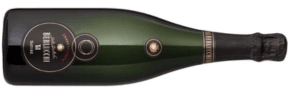 M6746118 | 2018 Franciacorta Brut Nature, Berlucchi | £39.36 List Price per bottle ex VAT Duty Paid List Price (75cl)
 242261I3 | 2023 Capitel Croce IGT, Anselmi | £18.00 List Price per bottle ex VAT Duty Paid List Price (75cl)
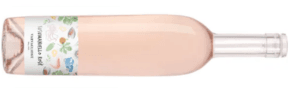 L0756124 | 2024 Susumaniello Rosé del Salento IGP, Varvaglione] | £15.28 List Price per bottle ex VAT Duty Paid List Price (75cl)
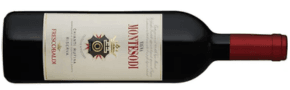 K6266122 | 2022 Montesodi, Frescobaldi | £37.19 List Price per bottle ex VAT Duty Paid List Price (75cl)