


Introducing Elanto: A New Chapter from Sandro Mosele
We welcome Elanto to the Enotria portfolio as Fine Wine Manager Tom King explores the story behind Sandro Mosele’s return to winemaking, his high-density Mornington Peninsula vineyard and the first releases from this exciting new producer.
We’re delighted to welcome Elanto to the Enotria portfolio, bringing an exciting new expression of Mornington Peninsula Chardonnay and Pinot Noir to our Australian range.
Established in Balnarring in 2019, Elanto is the latest project from acclaimed winemaker Sandro Mosele, whose approach to high-density planting and focus on site have created something particularly exciting from this young vineyard.
Our Fine Wine Manager, Tom King, has followed Sandro’s career for many years. Here, he introduces the story behind Elanto, the thinking that shaped the vineyard and his first impressions of the 2024 wines.

The Winemaker
Sandro Mosele is a hero of mine. I am in awe of the man’s talent. He was responsible for Mornington Peninsula's outstanding Kooyong wines, before departing several years ago, and disappearing from public view.
The Elanto Story
In our occasional communications since, Sandro alluded to a ‘new project’, but would not divulge details. That which was shrouded in mystery is now revealed: his genius has been devoted to establishing Elanto, a vineyard designed from the outset to make wines expressing terroir (a sense of place). In 2018, a south-east facing, free-draining, volcanic hillside property at Balnarring was acquired on the advice of world-leading soil expert, Claude Bourguignon. A year later, 10.6 hectares of Chardonnay and Pinot Noir vines were planted.

_Vertex, Ironstone, Chicory, Kilnside and Basalt are planted to Pinot Noir, while Chardonnay is grown on the Verge, Buckshot and Seawinds parcels. _ High-Density Viticulture
Sandro’s extensive experience taught him that deep-rooted vines more readily produce wine with a definite sense of place. To encourage roots to grow downwards instead of outwards, Elanto is planted at high density (HD) with 11,111 vines per hectare, making it Australia’s largest vineyard of this type. The narrow row spacing makes it look like a transplanted patch of Burgundy’s Côte d’Or, but what of the wines themselves? Does HD translate into a discernible qualitative difference?
The First Vintages
Elanto’s 2024 vintage wines are extraordinary, with impressive concentration and complexity, even though the vineyard was only planted in 2019. This is a staggering achievement, since vines less than a decade old normally produce straightforward, fruity wine. HD planting limits each individual vine’s production to a mere 300-500g, while intensifying the grapes’ flavour: something that would take years to achieve with less densely-planted vines.
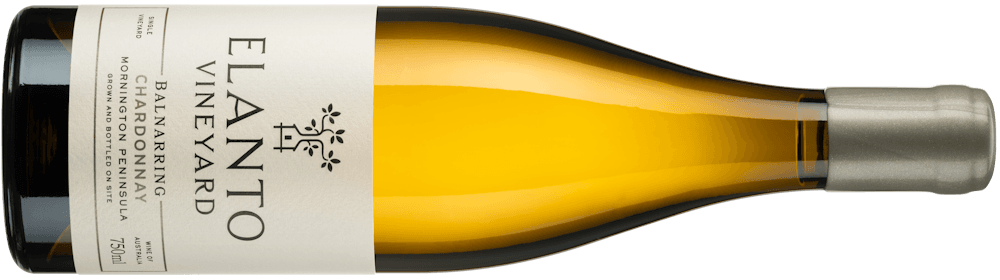
Elanto Chardonnay 2024
The first impression is the smell of a sea-washed pebble beach, followed by oatmeal, cream, greengage and green apple. With more exposure to air, honey, vanilla, chamomile and pineapple notes emerge, over caperberry brininess and lemon pith bitterness. A wine of pent-up power and restrained richness, it is focused around an almost tangible rocky core and Assyrtiko-like concentration. This tastes like it has staying power, but it has so much to give immediately that it will be hard to hold on to it.
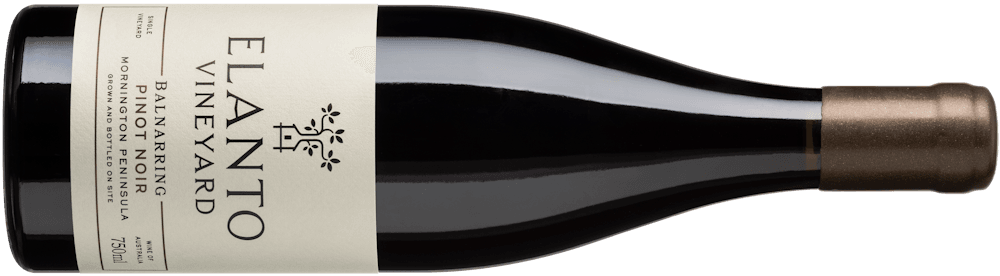
Elanto Pinot Noir 2024
The rosehip, cranberry, walnut and leather notes evoke a Premier Cru Volnay. This has papable ripeness, but subtlety, too, with hints of pot-pourri, clove and lily. The tannins are more supple and developed than most red Burgundy of the same age, and the palate begins full, rich and easy, before refining to filigree intricacy and soaring complexity on the finish. Already spectacular, this doesn't require keeping to be appreciated, although its evident ripeness is kept in check by a vital vein of acidity running through it. Outstanding.